Health Insurance
Health Insurance Claim Rejected? What to Do in India
By ATTPL HEALTHCARE Editorial Team · · 2 min read
Health insurance claim rejected in India? Understand the reason, file a grievance, use Bima Bharosa and approach the Insurance Ombudsman.
Understand why the claim was rejected
Ask for the rejection or repudiation letter and read the reason carefully. Common reasons include waiting periods, non-disclosure of existing conditions, exclusions, missing documents or treatment not considered medically necessary. Compare the reason with your policy wording.
Step 1: Respond and submit missing documents
If documents were missing, submit them quickly. Ask your treating doctor for a detailed note explaining the diagnosis and why the treatment was necessary.
Step 2: File a grievance with the insurer
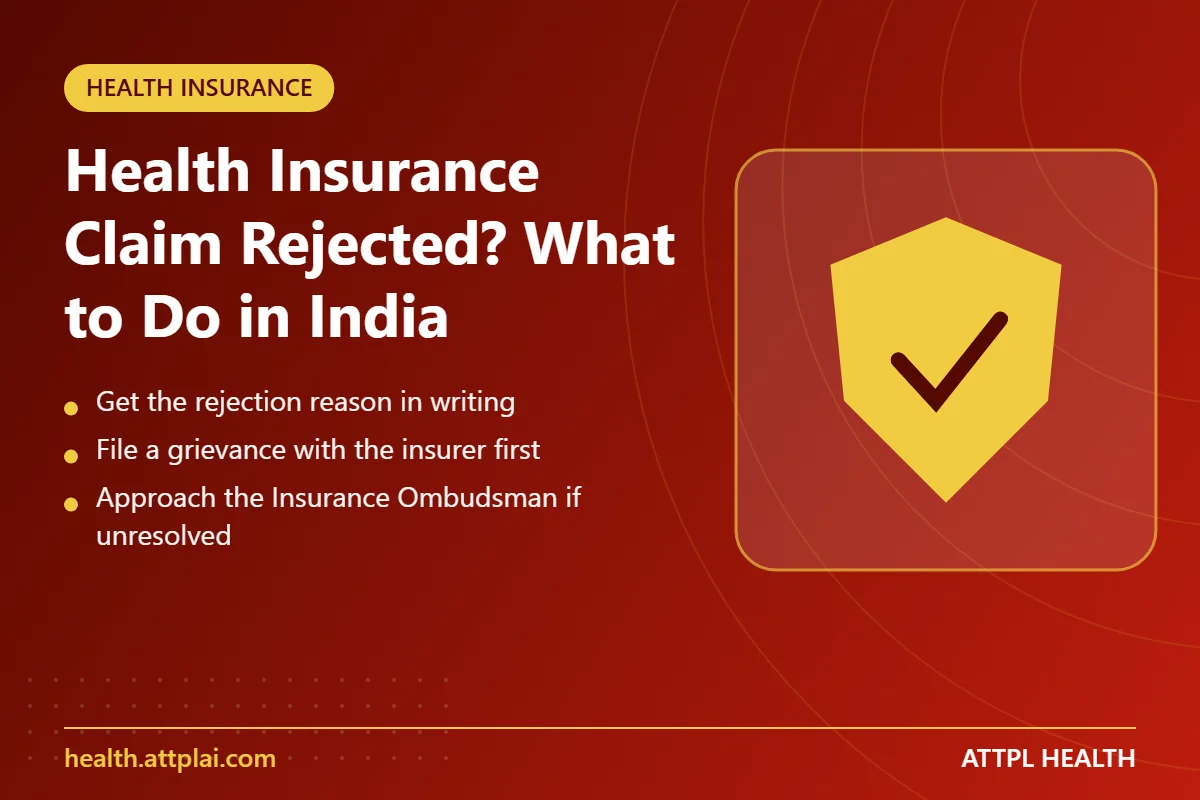
Write to the insurer's grievance redressal officer with your policy number, claim number and supporting documents. Insurers must acknowledge and respond within timelines set by IRDAI.
Step 3: Use Bima Bharosa
If the insurer does not respond or the reply is unsatisfactory, you can register your complaint on IRDAI's Bima Bharosa portal.
Step 4: Approach the Insurance Ombudsman
The Insurance Ombudsman offers a free, quick forum for disputes, including claim rejections, for claims up to a specified limit. Generally you must first approach the insurer, and complain to the Ombudsman within one year of the insurer's final reply.
Prevent future rejections
- Disclose all existing conditions honestly when buying a policy
- Understand waiting periods and exclusions
- Keep all bills, reports and discharge summaries
- Inform the insurer on time for planned and emergency admissions
Get help
ATTPL Health supports patients with health services, and ATTPL Legal can help with complaints and representations.
Frequently asked questions
Is the Insurance Ombudsman free?
Yes. There is no fee for filing a complaint with the Insurance Ombudsman.
Can an insurer reject a claim for non-disclosure after many years?
IRDAI rules provide a moratorium after a specified period of continuous coverage, after which claims cannot be contested on grounds of non-disclosure except for proven fraud. Check your policy wording.
Sources and further reading
This article is general information and not legal or insurance advice.