🤖 Digital Healthcare Service
AI & Digital Healthcare
Transforming healthcare delivery through artificial intelligence, digital innovation, data-driven insights, and connected healthcare technologies.
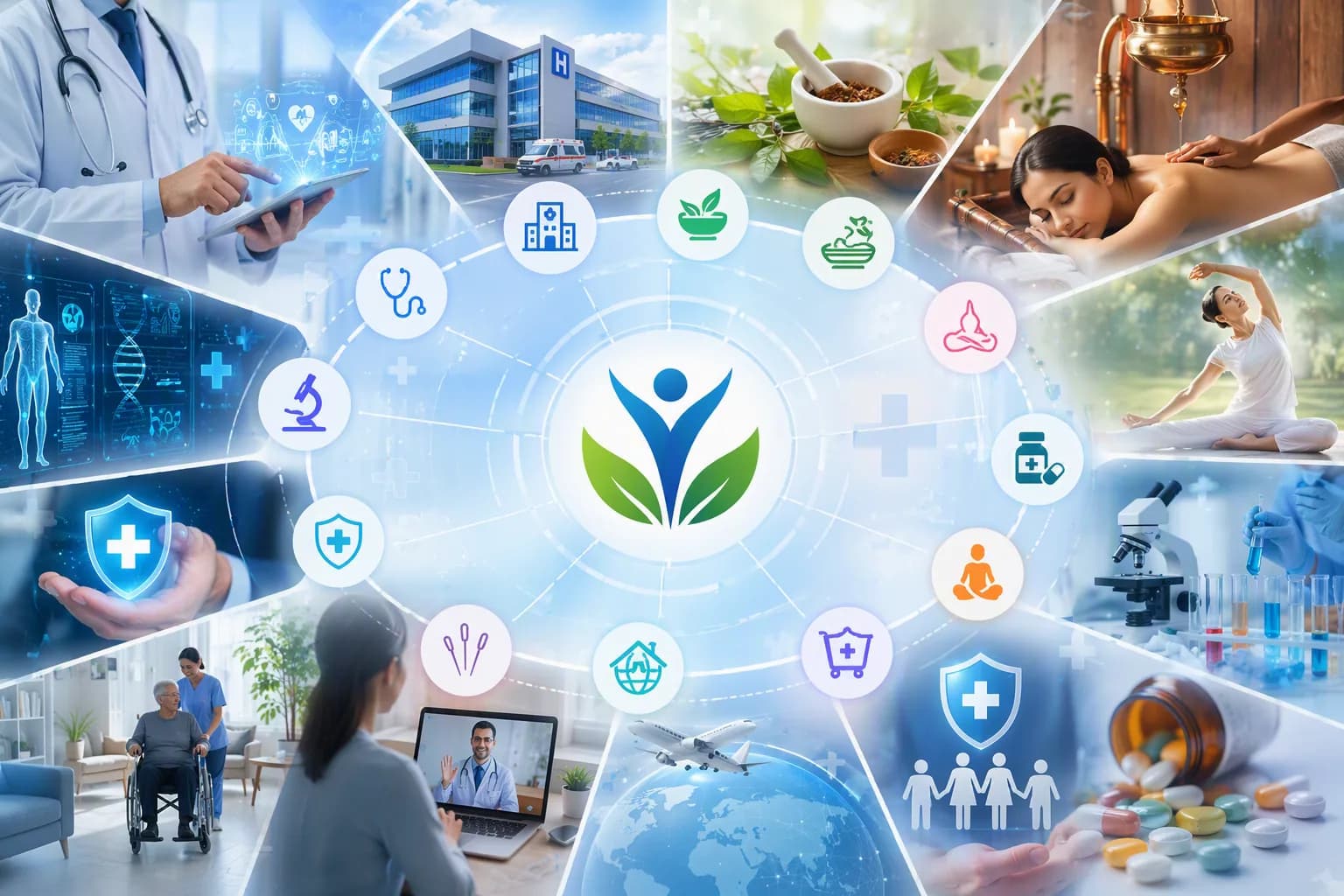
Transforming healthcare delivery through artificial intelligence, digital innovation, data-driven insights, and connected healthcare technologies.
ATTPL AI & Digital Healthcare Services leverage advanced technologies, artificial intelligence, digital health platforms, automation, analytics, and connected healthcare ecosystems to improve patient care, healthcare accessibility, operational efficiency, and clinical decision-making. By integrating technology with healthcare services, ATTPL enables smarter, faster, and more personalized healthcare experiences for patients, providers, and healthcare organizations.
Healthcare is undergoing a rapid digital transformation driven by advancements in artificial intelligence, data analytics, cloud technologies, healthcare automation, telemedicine, and digital health platforms. These innovations are reshaping the way healthcare services are delivered, managed, and experienced by patients and providers alike. ATTPL's AI & Digital Healthcare Services are designed to create a connected healthcare ecosystem that leverages technology to improve accessibility, efficiency, accuracy, and patient outcomes. By combining healthcare expertise with digital innovation, ATTPL helps healthcare providers, hospitals, clinics, diagnostic centers, pharmacies, insurers, and patients benefit from modern technology-enabled healthcare solutions. Artificial Intelligence (AI) plays a critical role in supporting healthcare decision-making, predictive analytics, personalized care, operational optimization, and patient engagement. AI-powered solutions can assist healthcare professionals by analyzing large volumes of data, identifying trends, supporting diagnostics, improving workflow efficiency, and enabling evidence-based decision-making. Digital healthcare platforms enable seamless access to medical records, teleconsultations, online appointments, diagnostic reports, pharmacy services, health insurance support, wellness programs, and patient monitoring solutions. Through a unified healthcare environment, patients can access healthcare services conveniently from any location while maintaining continuity of care. Telemedicine and virtual healthcare services have expanded healthcare accessibility by enabling remote consultations between patients and healthcare professionals. These digital services reduce travel requirements, improve healthcare reach, and support continuous care for individuals in urban as well as rural communities. Healthcare data plays a crucial role in improving outcomes and operational performance. Advanced analytics and digital reporting systems help healthcare organizations monitor health trends, assess population health, improve resource allocation, and enhance care delivery efficiency. Data-driven healthcare strategies contribute to better patient experiences and informed clinical decisions. Remote patient monitoring technologies allow healthcare providers to track patient health indicators in real time, enabling proactive intervention and continuous management of chronic conditions. These solutions improve treatment adherence, reduce unnecessary hospital visits, and enhance overall patient safety. Digital health innovations also support healthcare administration through appointment management, workflow automation, patient engagement systems, electronic health records (EHR), billing integration, inventory management, and healthcare coordination. These capabilities reduce administrative burdens while improving operational efficiency. Cybersecurity, privacy protection, and secure healthcare data management are fundamental components of digital healthcare. ATTPL emphasizes responsible technology adoption, secure information management, and patient confidentiality while delivering digital healthcare solutions that meet modern healthcare standards. The future of healthcare lies in intelligent, connected, and patient-centric systems. ATTPL's AI & Digital Healthcare Services empower healthcare organizations, professionals, and individuals with innovative technologies that improve healthcare accessibility, support better decision-making, enhance patient experiences, and create sustainable healthcare ecosystems for the future.
Improves healthcare accessibility
Enhances patient engagement and satisfaction
Supports faster clinical decision-making
Reduces administrative workload
Improves healthcare efficiency and productivity
Enables remote healthcare delivery
Supports data-driven healthcare planning
Enhances continuity of care
Optimizes healthcare operations
Promotes innovation in healthcare services