Diabetes
Diabetic Foot Care: Daily Habits, Check-ups and Warning Signs
By ATTPL HEALTHCARE Editorial Team · · 2 min read
How people with diabetes can protect their feet: daily checks, washing and footwear, annual foot examination, and the warning signs that need urgent care.
Why feet need special care in diabetes
Over time, high blood sugar can damage the nerves of the feet (neuropathy) and reduce blood flow. A person may not feel a small cut, blister or burn, and slow healing can let a minor wound become an ulcer or infection. Most serious foot problems in diabetes are preventable with simple daily care and regular check-ups.
Daily foot-care routine
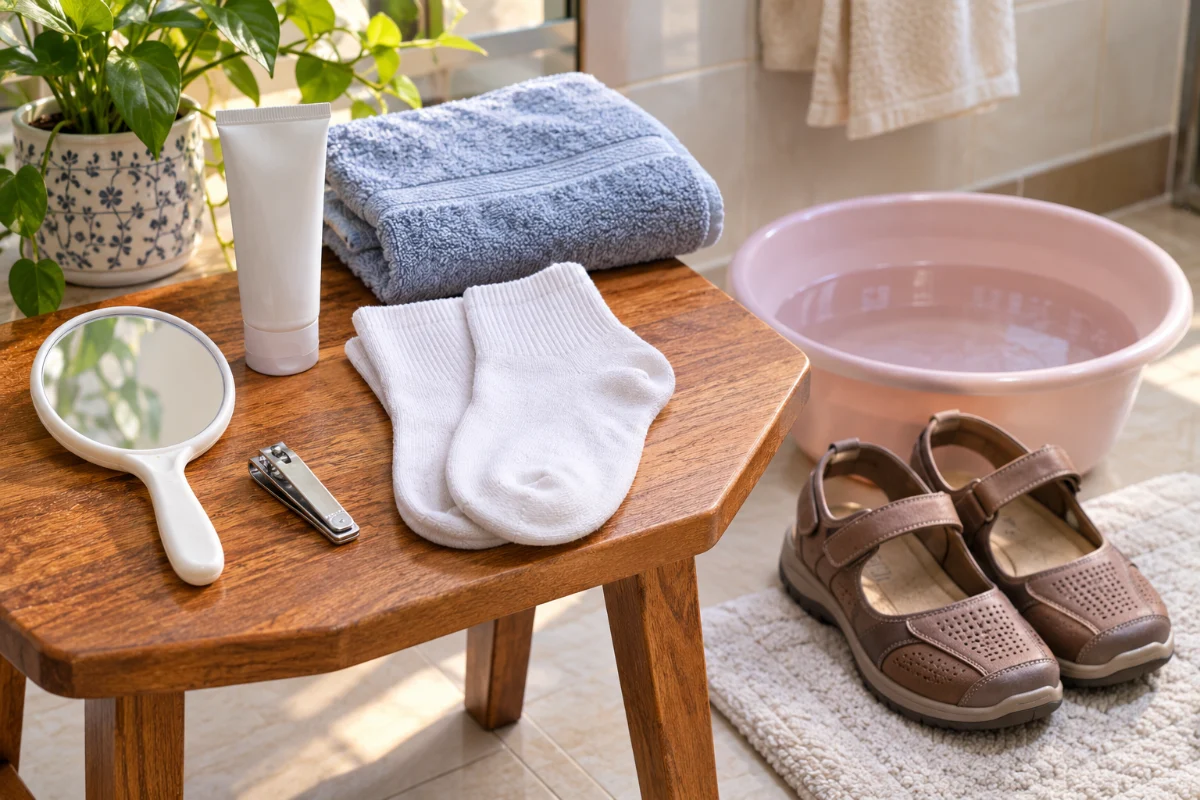
- Look at both feet every day, including soles and between the toes; use a mirror or ask a family member
- Wash with lukewarm water, testing the temperature with your elbow, and dry well between the toes
- Moisturise dry skin, but not between the toes
- Cut nails straight across and do not dig into the corners
- Never walk barefoot, even at home, in temples or on hot surfaces
- Do not cut corns or calluses yourself or use corn caps
Footwear that protects
Choose soft, closed, well-fitting footwear with a cushioned sole and enough room for the toes. Buy shoes in the evening when feet are slightly larger, check inside for stones or rough seams before wearing, and wear clean cotton socks. People with deformity or past ulcers may need special footwear advised by a doctor.
Regular foot check-ups
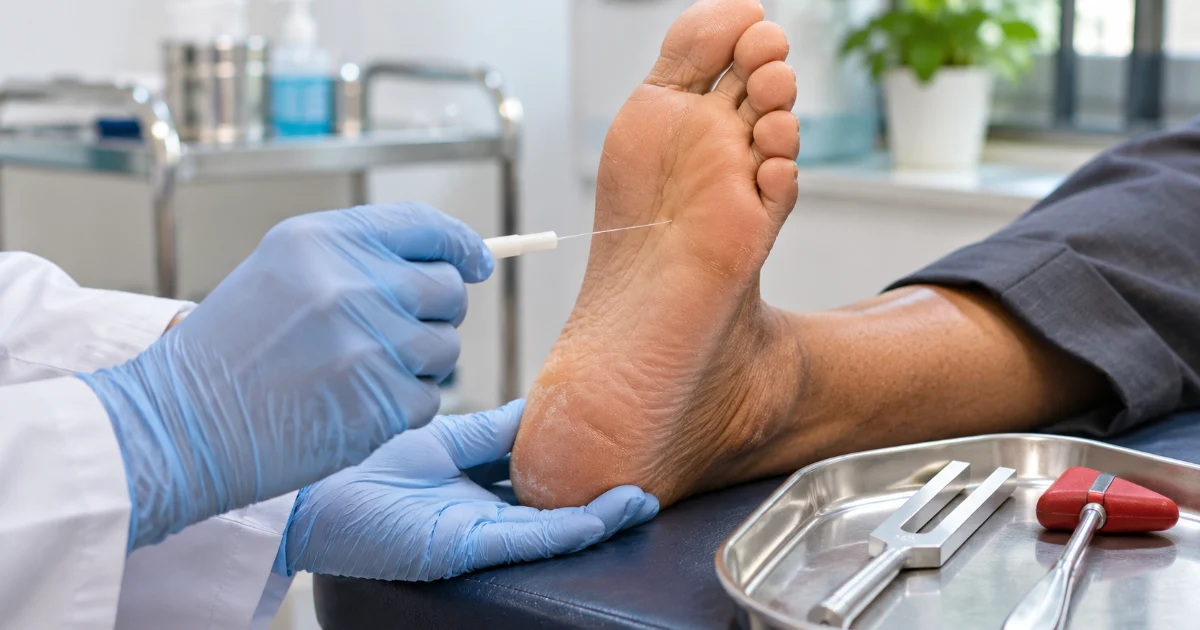
A doctor should examine your feet at least once a year, and more often if you have numbness, poor circulation or a past ulcer. The check usually includes a monofilament test for sensation, a tuning fork for vibration, pulses and skin and nail inspection. Combine it with your routine diabetes tests such as HbA1c and other preventive check-ups.
Good sugar, blood pressure and cholesterol control, and stopping smoking, protect the nerves and blood vessels of the feet.
Warning signs: see a doctor the same day
- Any wound, blister or crack that does not start healing in a day or two
- Redness, warmth, swelling or pus
- A change in skin colour to dark, blue or black
- New pain, numbness or a foot that looks deformed
- Fever with a foot wound
Early treatment can prevent hospital stays and amputations. Elderly family members may need help with daily checks; see home healthcare and elder care planning.
How ATTPL Healthcare can help
ATTPL Healthcare helps families in Jaipur find diabetes and foot-care specialists, schedule check-ups and plan follow-up care.
Frequently asked questions
How often should a person with diabetes check their feet?
Every day at home, and with a doctor at least once a year, or more often if there is numbness, poor circulation or a past ulcer.
Can people with diabetes use a foot massager or hot water bottle?
Be careful: reduced sensation increases the risk of burns. Ask your doctor before using heat on the feet.
Is it safe to remove a corn at home?
No. Do not cut corns or use corn caps; ask a doctor or trained foot-care professional.
Sources and further reading
This article is general health information, not medical advice, diagnosis or treatment. Always consult a qualified doctor for your situation, and seek emergency care for severe symptoms.