Preventive Health
How to Check Blood Pressure at Home Correctly
By ATTPL HEALTHCARE Editorial Team · · 3 min read
Step-by-step guide to measuring blood pressure at home: choosing a monitor, correct posture, when to measure, recording readings and when to see a doctor.
Why home monitoring helps
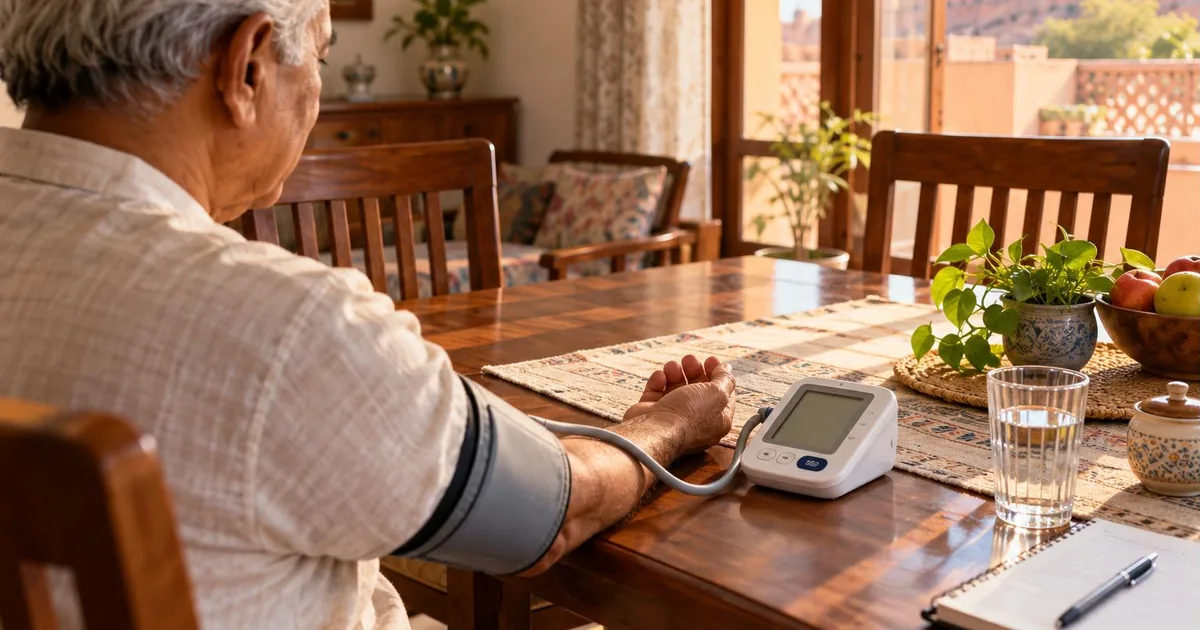
High blood pressure often has no symptoms, which is why it is called a silent condition. Many people in India live with raised blood pressure without knowing it, and it increases the risk of heart attack, stroke and kidney disease. Measuring blood pressure at home is one of the simplest ways to catch a problem early and to help your doctor manage treatment. But home readings are only useful if they are taken correctly.
A single reading at a clinic can be misleading. Some people show higher readings in the doctor's room because of anxiety, while others have normal clinic readings but high pressure at home. Regular home readings give a more complete picture over days and weeks, show whether medicines are working and encourage people to stay involved in their own care.
Choosing a blood pressure monitor
- Prefer an automatic upper-arm monitor; wrist and finger devices are generally less reliable.
- Choose a device that has been clinically validated for accuracy.
- Make sure the cuff size fits your arm; a cuff that is too small or too large gives wrong readings.
- Ask your doctor or pharmacist to check your monitor against a clinic device once a year.
Step-by-step: measuring correctly
- Avoid tea, coffee, smoking and exercise for at least 30 minutes before measuring.
- Empty your bladder, then sit quietly for five minutes.
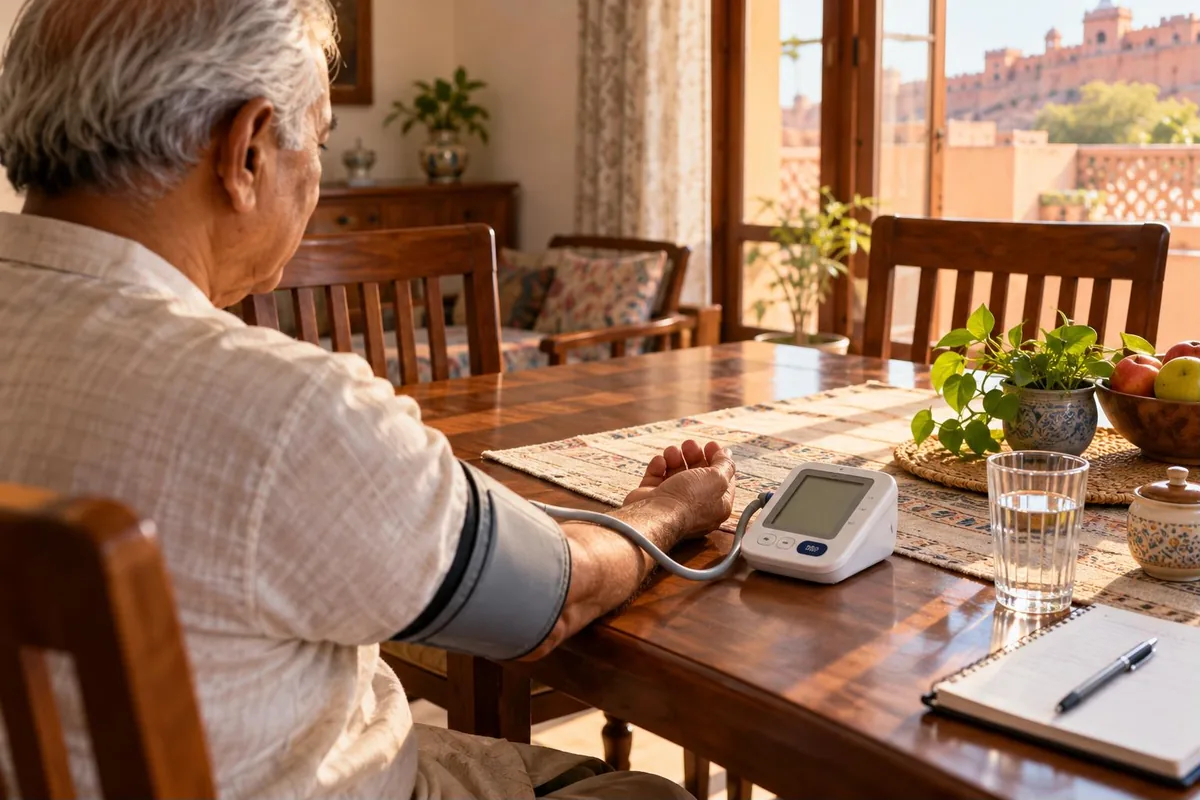
- Sit on a chair with your back supported and both feet flat on the floor, legs uncrossed.
- Rest your arm on a table so that the cuff is at the level of your heart.
- Wrap the cuff on bare skin of the upper arm, about two finger-widths above the elbow crease.
- Stay still and do not talk during the measurement.
- Take two readings one minute apart and note both.
When and how often to measure
If your doctor asks you to monitor at home, a common routine is to measure in the morning before medicines and breakfast and again in the evening, for about a week before a follow-up visit. Once blood pressure is well controlled, less frequent checks may be enough. Follow the schedule your doctor recommends rather than checking many times a day, which can cause unnecessary worry.
Understanding your readings
Blood pressure is recorded as two numbers: systolic (the pressure when the heart beats) over diastolic (the pressure between beats), in mmHg. Many Indian and international guidelines consider readings of 140/90 mmHg or above, confirmed on repeated measurement, as high blood pressure, and home readings may be interpreted with slightly lower cut-offs. Your doctor will decide your personal target based on age and other conditions such as diabetes or kidney disease. Do not change or stop medicines on your own because of a few readings.
Warning signs that need urgent care
Seek emergency help, for example by calling 108 for an ambulance, if a very high reading comes with chest pain, breathlessness, sudden severe headache, weakness or numbness on one side, difficulty speaking, confusion or vision changes. These can be signs of a heart attack or stroke, and time matters. Our ambulance service page and our guide on the golden hour after road accidents explain why quick action saves lives.
Lifestyle steps that help
Reducing salt, eating more fruits and vegetables, staying active, keeping a healthy weight, limiting alcohol, stopping tobacco and sleeping well all help control blood pressure. Regular preventive check-ups catch related problems such as high blood sugar and cholesterol early; see our preventive healthcare services. Employers can support staff through corporate health check-ups, and companies using ATTPL HRMS can schedule and track wellness programmes for employees.
Plan for long-term care
High blood pressure usually needs lifelong attention, regular consultations and sometimes tests. Health insurance helps manage these costs; ATTPL Finance's family insurance checklist explains what to look for. To consult a doctor or book a check-up through ATTPL Health, visit our doctor consultation page or contact us.
Frequently asked questions
Are wrist blood pressure monitors accurate?
Upper-arm monitors are generally more reliable. Wrist devices are more sensitive to position and are usually recommended only when an upper-arm cuff cannot be used.
Why are my home readings different from the clinic?
Readings vary with anxiety, activity, time of day and technique. Home readings over several days give a better picture; share them with your doctor.
What blood pressure is considered high?
Many guidelines treat 140/90 mmHg or higher on repeated readings as high blood pressure. Your doctor will set your personal target.
Sources and further reading
This article is for general awareness only and is not a substitute for medical advice. Please consult a qualified doctor for diagnosis and treatment.