Diagnostics
CBC Blood Test Report: A Simple Guide
By ATTPL HEALTHCARE Editorial Team · · 3 min read
Understand your CBC report: haemoglobin, RBC, WBC, platelets and what low or high values may mean, including anaemia. Always consult a doctor.
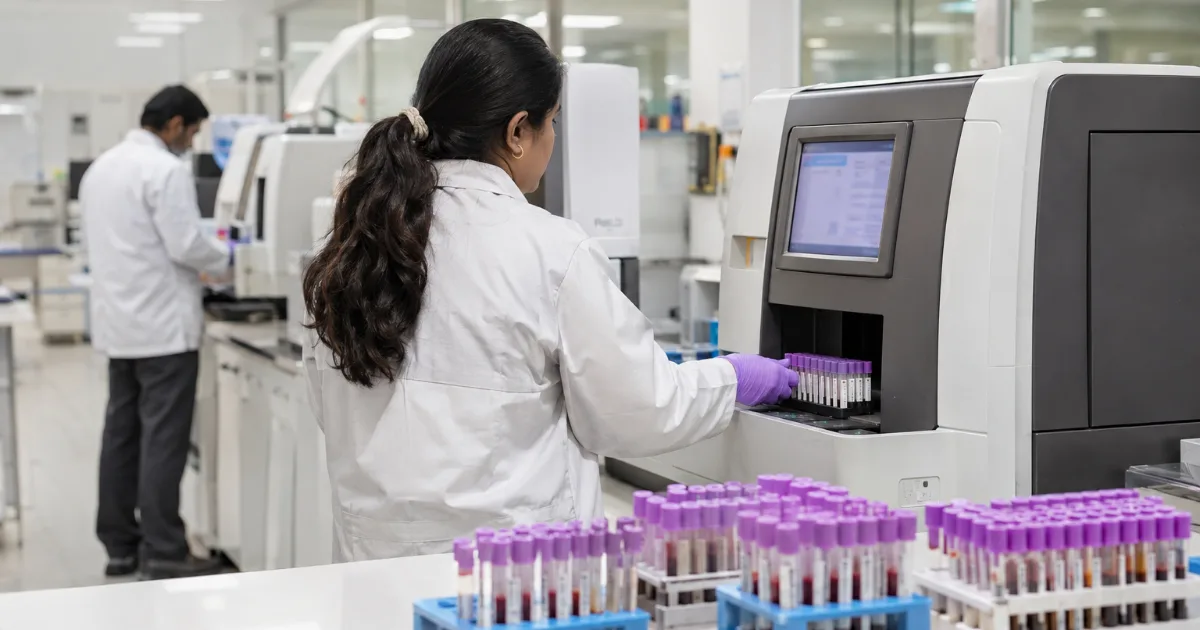
What is a CBC test?
A complete blood count, or CBC, is one of the most common blood tests in India. Doctors order it during fever, tiredness, before surgery, in pregnancy and as part of routine health check-ups. It needs only a small sample from a vein, usually no fasting, and the report is often ready the same day.
The CBC looks at the three main types of cells in your blood: red blood cells that carry oxygen, white blood cells that fight infection, and platelets that help blood clot. Because it gives a quick overview of general health, it is a useful starting point, but it rarely gives a final diagnosis on its own.
Reading the main values on your report
Every report lists your result next to the laboratory's reference range. Ranges differ by lab, age and sex, so compare your value with the range printed on your own report.
- Haemoglobin (Hb): the oxygen-carrying protein in red cells. A low value is the usual sign of anaemia.
- RBC count and haematocrit (PCV): the number of red cells and the share of blood made up of red cells.
- MCV, MCH and MCHC (red cell indices): describe the size and colour of red cells. Small, pale cells can point towards iron deficiency, while large cells can point towards low vitamin B12 or folate, among other causes.
- WBC count with differential: total white cells plus the types (neutrophils, lymphocytes and others). Changes can be seen with infections, allergies, some medicines and other conditions.
- Platelet count: low platelets can occur in viral fevers such as dengue; very high or very low counts need a doctor's review.
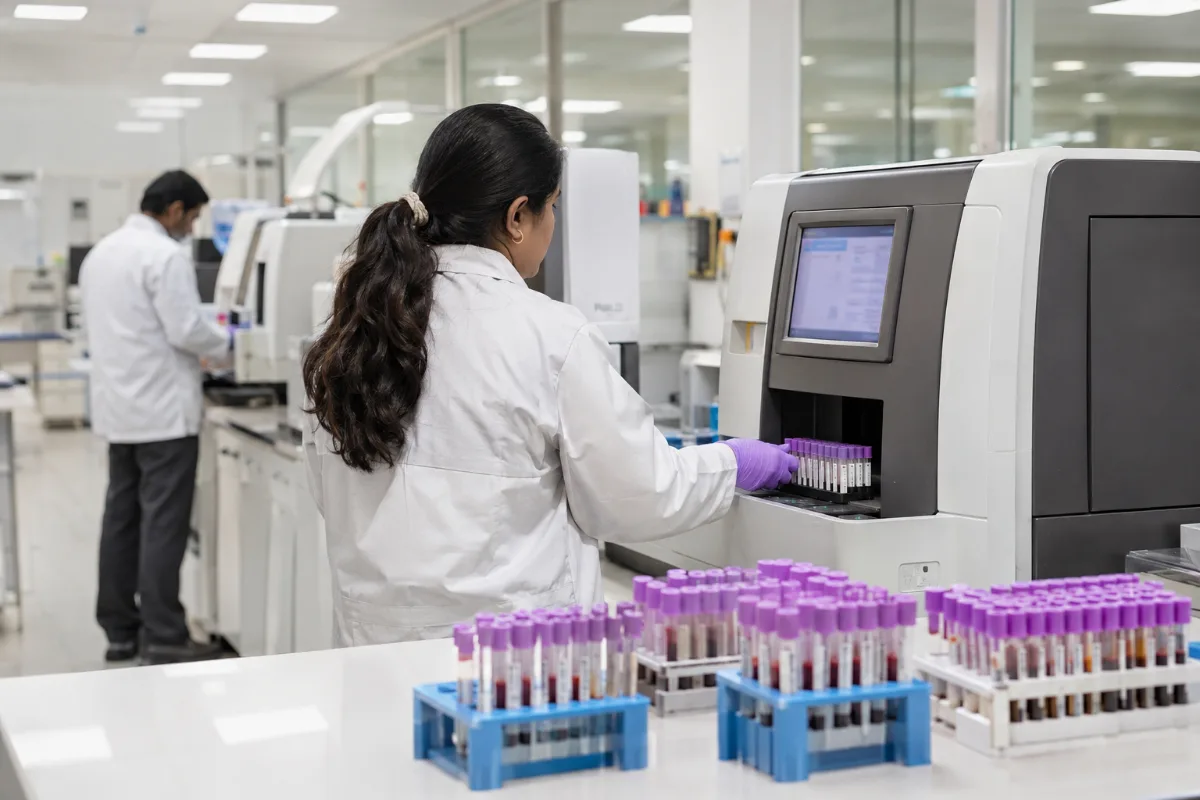
Anaemia: a common finding
Anaemia means your blood has less haemoglobin than normal. It is a widely reported public health concern in India, especially among women, adolescent girls, pregnant women and young children. Common signs include tiredness, breathlessness on climbing stairs, pale skin, dizziness, headaches and brittle nails, but mild anaemia may cause no symptoms at all.
There are many causes. Iron deficiency is common, often linked to diet, heavy periods, pregnancy or blood loss. Low vitamin B12 can occur in people who eat little or no animal-source food. Worm infections, long-term illnesses and inherited conditions such as thalassaemia are other possible causes. Because the cause guides the treatment, a doctor may order further tests such as serum ferritin, vitamin B12 or a peripheral smear.
Do not take iron or other supplements for long periods without advice. Too much iron can be harmful, and supplements can hide a cause that needs attention.
When a CBC is ordered during fever
During monsoon and post-monsoon months in Rajasthan, doctors often order a CBC for fever to look at white cells and platelets. A falling platelet count can be one of the signs doctors monitor in dengue, so the test may be repeated daily for a few days. Our guide to dengue warning signs and tests explains when to seek urgent care. Never judge a fever only from a home reading or a single report.
Tips for an accurate test
- Tell the lab and doctor about recent illness, medicines, supplements or pregnancy.
- Drink water normally before the test unless told otherwise; heavy exercise just before testing can slightly change some values.
- Use an accredited lab and, for follow-ups, the same lab if possible so trends are easier to compare.
- Keep old reports. A slow fall in haemoglobin over two years can be more meaningful than one slightly low value.
A CBC is part of most packages in our preventive health check-up guide by age, and you can book it through our diagnostics and laboratory services.
Getting help in Jaipur
ATTPL Healthcare is part of the wider ATTPL group ecosystem of the ATTPL (ऐट्प्ल) HOLDCO - GROUP, and helps families arrange lab tests, doctor consultations and follow-up care. If your CBC shows a value outside the range, the most important next step is to show the full report to a qualified doctor rather than searching for answers online. To book a CBC or a doctor's review of your report, contact ATTPL Healthcare.
Frequently asked questions
Do I need to fast for a CBC test?
Usually no. A CBC can be done at any time of day. If other tests such as fasting sugar are added, follow the lab's fasting instructions.
Does low haemoglobin always mean iron deficiency?
No. Iron deficiency is common, but low vitamin B12 or folate, blood loss, infections, chronic illness and inherited conditions can also cause anaemia. A doctor decides which further tests are needed.
How often should I get a CBC?
Many adults include it in a yearly check-up. People with anaemia, pregnancy, chronic illness or on certain medicines may need it more often, as advised by their doctor.
Sources and further reading
This article is for general awareness and is not medical advice. Blood test results must be interpreted by a qualified doctor along with your symptoms and history; please consult a doctor.