Diagnostics
Hearing Tests for Adults: When to Get an Audiometry Test
By ATTPL HEALTHCARE Editorial Team · · 2 min read
Signs of hearing loss in adults, what pure tone audiometry and other hearing tests involve, how to read the audiogram basics and how to protect your hearing.
Why hearing checks matter
Hearing loss often develops slowly, so many people do not notice it until conversations become difficult. Untreated hearing loss can affect work, relationships and safety. A simple hearing test can detect problems early, when treatment or hearing aids work best.
Signs you should get tested
- Frequently asking people to repeat themselves.
- Difficulty following conversations in noisy places.
- Turning up the TV or phone volume more than others.
- Ringing or buzzing in the ears (tinnitus).
- Sudden hearing loss in one ear — this needs urgent medical attention.
- Long-term exposure to loud noise at work or from headphones.
Types of hearing tests
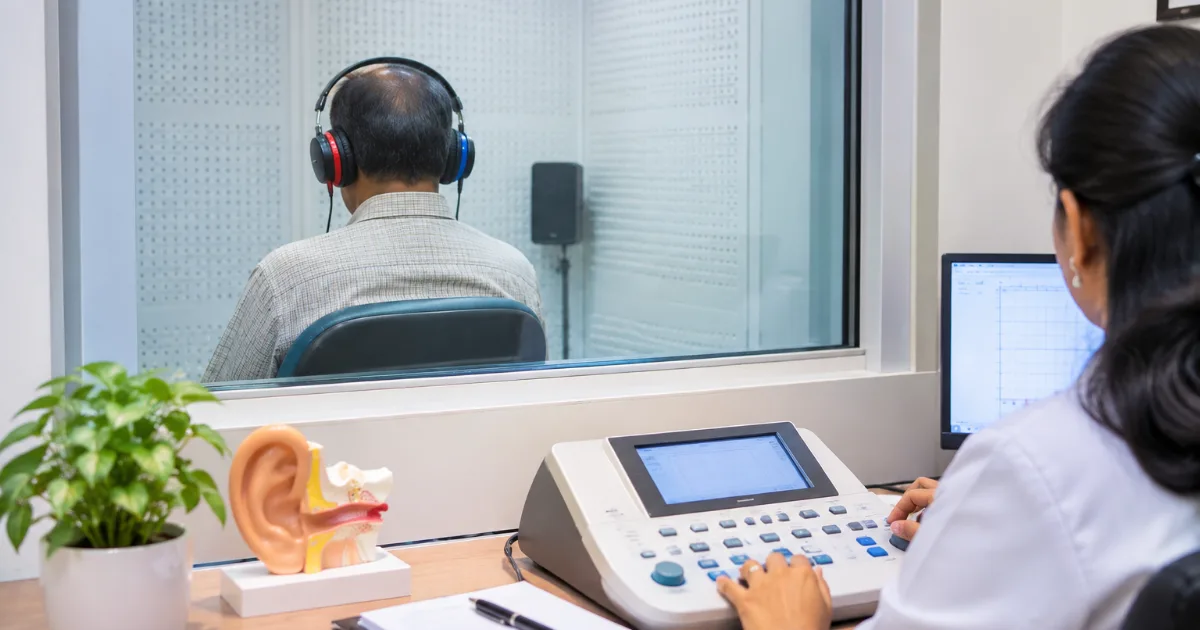
- Pure tone audiometry: you wear headphones in a quiet booth and respond to tones of different pitch and loudness; the results are plotted on an audiogram.
- Speech audiometry: measures how well you hear and understand words.
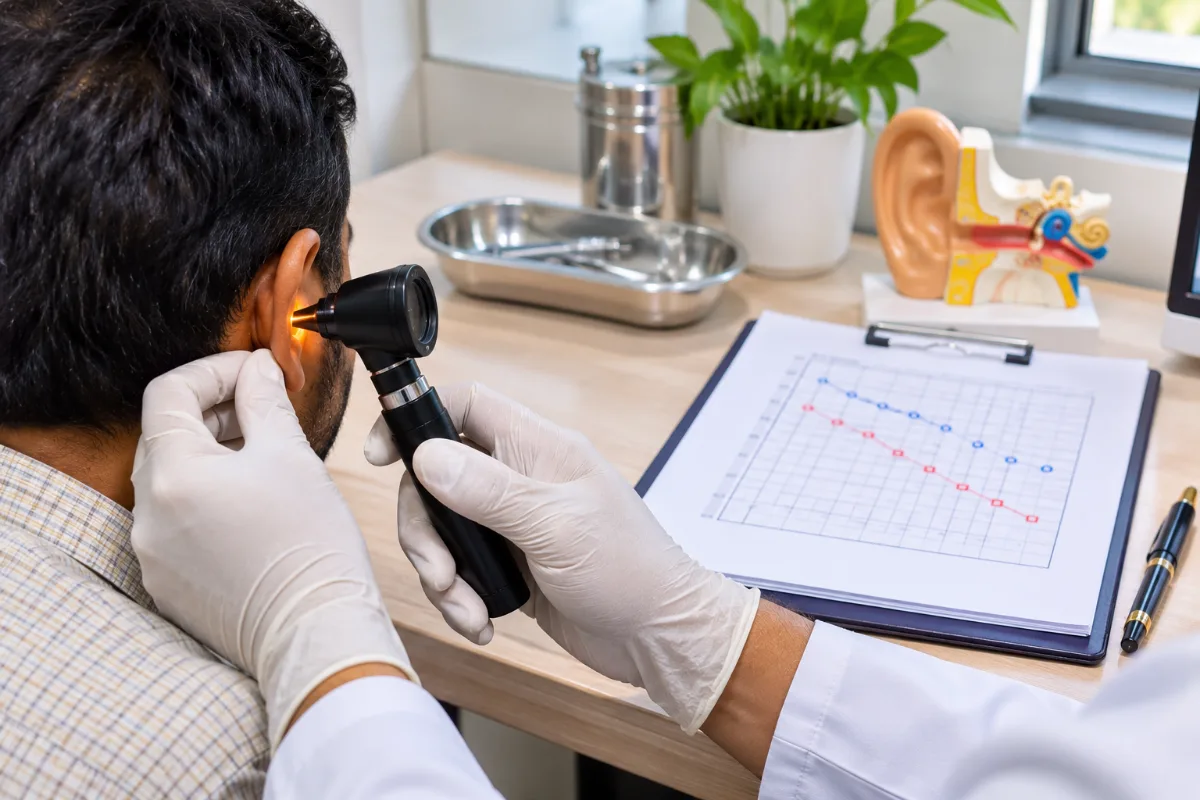
- Tympanometry (impedance test): checks how the eardrum and middle ear move, useful for fluid or blockage.
- Specialised tests such as otoacoustic emissions or brainstem response tests may be advised in some cases.
Tests are usually painless and take less than an hour. Avoid loud noise for some hours before the test and tell the audiologist about ear pain, discharge or recent colds.
Understanding the results
The audiogram shows the softest sound you can hear at each pitch. Results are generally described as normal, or as mild, moderate, severe or profound hearing loss, and as conductive (outer or middle ear), sensorineural (inner ear or nerve) or mixed. Your ENT doctor or audiologist explains what your results mean and recommends treatment, hearing aids or follow-up. Our diagnostics services can help you book tests.
Protecting your hearing
- Keep headphone volume moderate and take listening breaks.
- Use ear protection in noisy workplaces and events.
- Do not insert cotton buds or objects deep into the ear.
- Get ear infections treated promptly.
- Include hearing checks in routine health screening, especially after 50; see preventive health check-ups by age.
Employers with noisy operations can include audiometry in corporate health check-ups; factory safety obligations are covered in the industrial safety compliance checklist.
Frequently asked questions
Is a hearing test painful?
No. Standard hearing tests are non-invasive and painless.
How often should adults get a hearing test?
If you have no symptoms, periodic checks are reasonable, more often after 50 or with noise exposure; ask your doctor.
Is sudden hearing loss an emergency?
Yes. Sudden hearing loss in one or both ears should be seen by a doctor urgently.
Sources and further reading
This article is for general awareness only and is not a substitute for medical advice. Consult a doctor for diagnosis and treatment.