Preventive Health
Bone Health and the Bone Density (DEXA) Test: A Guide
By ATTPL HEALTHCARE Editorial Team · · 3 min read
How to protect bone health and when a DEXA bone density scan helps: osteoporosis risk factors, T-scores, calcium, vitamin D and exercise.
Who is at higher risk
Bones are living tissue that is constantly broken down and rebuilt. After middle age, especially in women after menopause, bone loss can outpace bone building. This leads to osteoporosis — weak, porous bones that can break after a minor fall. Osteoporosis has no symptoms until a fracture happens, which is why understanding risk and testing at the right time matters.
- Women after menopause and men in older age groups.
- People with a family history of osteoporosis or hip fracture.
- Low body weight, smoking and heavy alcohol use.
- Long-term use of certain medicines such as steroids, as advised by a doctor.
- Conditions such as rheumatoid arthritis, thyroid disorders and low vitamin D.
- Very little physical activity or sun exposure.
What a DEXA scan is
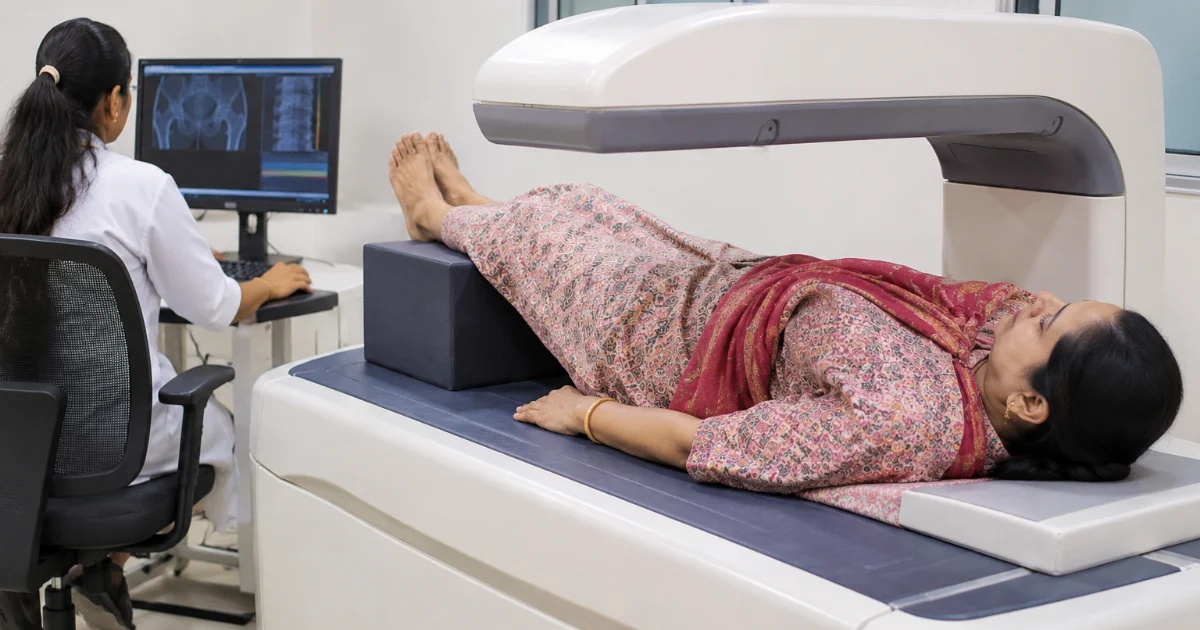
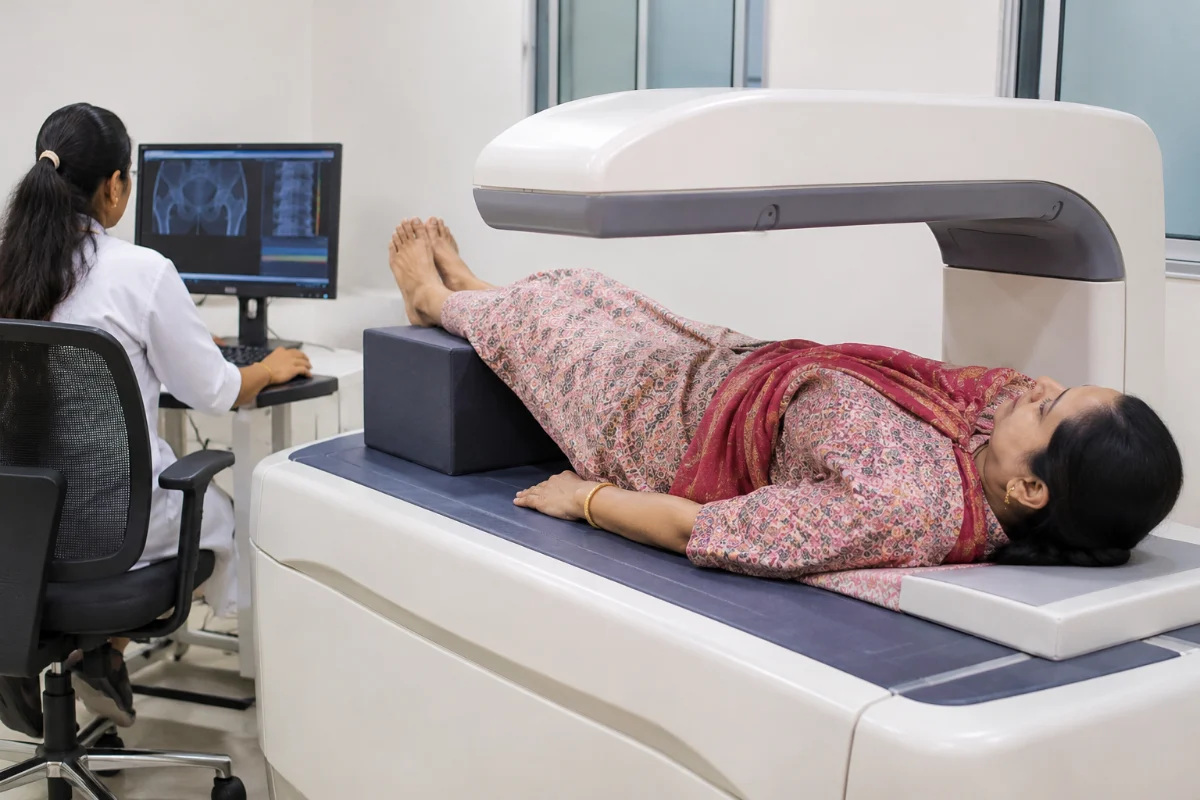
Dual-energy X-ray absorptiometry (DEXA) is the standard test to measure bone mineral density, usually at the hip and spine. It is quick, painless and uses a very low dose of radiation. You lie on a table while a scanner arm passes over your body. No special preparation is usually needed, but avoid calcium supplements on the day of the test if advised.
Understanding T-scores
Results are often given as a T-score, comparing your bone density with that of a healthy young adult. As a general guide used internationally, a T-score of −1.0 or above is considered normal, between −1.0 and −2.5 indicates low bone mass (osteopenia), and −2.5 or below suggests osteoporosis. Your doctor interprets the result along with your age, risk factors and fracture history.
Nutrition for strong bones
- Include calcium-rich foods: milk, curd, paneer, ragi, sesame and green leafy vegetables.
- Maintain adequate vitamin D through safe sun exposure and diet; check levels if advised — see our vitamin D and B12 test guide.
- Eat enough protein.
- Limit excess salt, soft drinks and caffeine.
Supplements should be taken only on a doctor's advice.
Exercise and fall prevention
Weight-bearing and strength exercises — brisk walking, stair climbing, yoga and light resistance training — help maintain bone and muscle. For older adults, preventing falls is as important as bone density: good lighting, grab bars in bathrooms, non-slip footwear and regular eye check-ups reduce the risk of fractures.
Bone health at different ages
Bone mass builds through childhood and adolescence and reaches its peak in early adulthood. Good nutrition, outdoor activity and sports in young years build a stronger "bone bank" for later life. In middle age, maintaining activity and avoiding smoking slows loss. After menopause, the fall in oestrogen speeds bone loss in women, which is why this period deserves special attention. In older age, the focus shifts to preventing falls and fractures.
Myths about bone health
- "Only women get osteoporosis" — men can develop it too, especially in older age.
- "Calcium tablets alone are enough" — exercise, vitamin D and overall nutrition matter as well.
- "Bone pain means osteoporosis" — osteoporosis is usually painless until a fracture happens.
- "Nothing can be done after diagnosis" — treatment and lifestyle changes can reduce fracture risk.
Accurate information helps families make better decisions for elderly parents and for themselves.
Treatment and follow-up
If osteoporosis is diagnosed, doctors may recommend medicines along with lifestyle changes, and repeat scans at intervals to monitor response. Do not start or stop medicines without advice. Women approaching menopause can discuss bone health during routine check-ups; see our preventive check-ups by age. Health insurance for parents is explained by ATTPL Finance, and elder rights by ATTPL Legal. For guidance on tests, contact ATTPL Healthcare.
Frequently asked questions
Is a DEXA scan painful?
No. It is a quick, painless scan with a very low dose of radiation.
Who should get a bone density test?
Women after menopause, older men and people with risk factors, as advised by a doctor.
Can osteoporosis be prevented?
Risk can be reduced with adequate calcium and vitamin D, regular weight-bearing exercise, avoiding smoking and preventing falls.
Can young people have low bone density?
It is less common, but it can occur with certain medical conditions, medicines or very low body weight; a doctor will decide if testing is needed.
Sources and further reading
This article is for general awareness only and is not a substitute for medical advice. Consult a doctor before starting supplements or treatment.