Patient Guides
Kidney Stones: Symptoms, Tests, Treatment Options and Prevention
By ATTPL HEALTHCARE Editorial Team · · 2 min read
A practical guide to kidney stones — common causes, pain and warning signs, tests such as ultrasound and CT, treatment options and daily habits that help prevent new stones.
Symptoms
Kidney stones are hard deposits that form in the kidneys and can cause severe pain when they move. They are common in hot, dry places like Rajasthan, where people lose more water through sweat.
Sharp pain in the side or back that may spread to the lower abdomen or groin, pain while passing urine, blood in urine, nausea and frequent urge to urinate are typical. Small stones may cause no symptoms.
When to seek urgent care
- Severe pain that does not settle with prescribed medicine
- Fever and chills with pain, which may mean infection
- Unable to pass urine
- Persistent vomiting

Tests and treatment
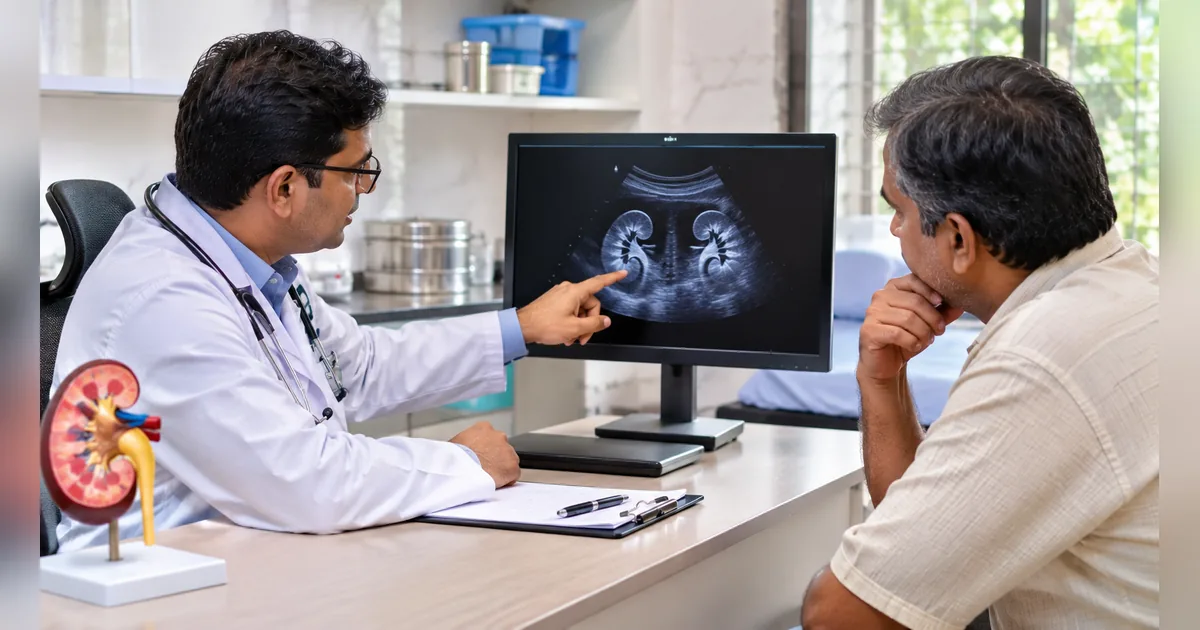
Doctors use ultrasound or CT scan, along with urine tests and kidney function tests. Many small stones pass with fluids and pain relief. Larger stones may need procedures such as shock-wave lithotripsy or endoscopic surgery, chosen by a urologist.
Preventing new stones
Drink enough water through the day so urine stays light in colour, more in summer. Limit excess salt and processed food, and follow the doctor's advice on diet based on stone type. Stone analysis can guide prevention. ATTPL Healthcare helps patients find urologists and accredited labs.
Frequently asked questions
Can kidney stones pass on their own?
Small stones often pass with fluids and medicine; larger ones may need treatment.
Does drinking more water really help?
Yes. Good hydration is one of the most effective ways to prevent new stones.
Should I stop eating all calcium?
No. Very low calcium can increase some stones; follow your doctor's advice.
Sources and further reading
This article is general health information, not medical advice, diagnosis or treatment. Consult a qualified doctor for your situation.