Bone & Joint Health
Knee Osteoarthritis: Causes, Symptoms and Treatment Options
By ATTPL HEALTHCARE Editorial Team · · 2 min read
Knee osteoarthritis explained: who gets it, early symptoms, tests, exercise and weight management, medicines, injections, knee replacement and when to see a doctor.

What knee osteoarthritis is
Osteoarthritis is the most common form of arthritis. In the knee, the smooth cartilage that cushions the joint gradually wears down, the bone underneath changes and the joint lining can become inflamed. It is more common with age, in women, in people with excess body weight, after old knee injuries and in those whose work involves heavy kneeling or squatting.
Common symptoms
- Pain that worsens with walking, climbing stairs or getting up from the floor
- Stiffness in the morning or after rest that usually eases within about half an hour
- A grating or cracking feeling in the knee
- Swelling, reduced bending and, in later stages, bowing of the legs
Symptoms often come and go over months. Early action keeps you active for longer.
How it is diagnosed
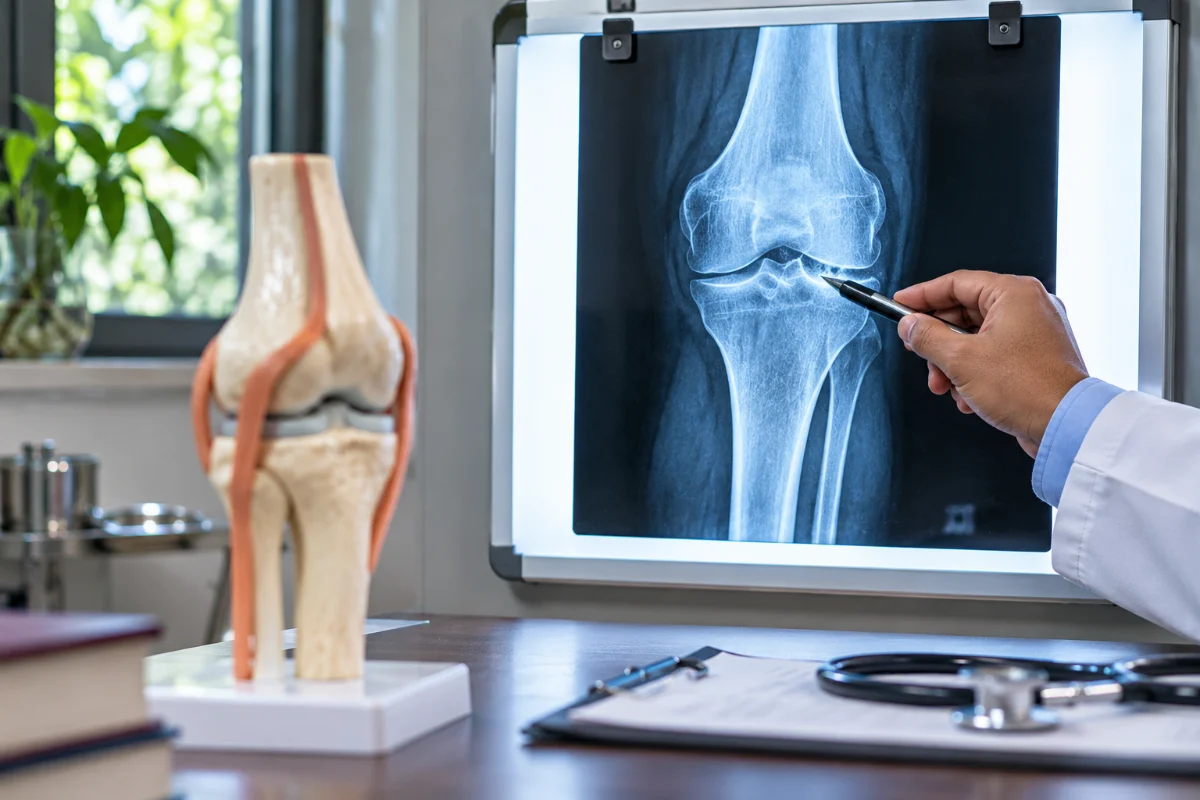
A doctor usually diagnoses knee osteoarthritis from your history and an examination. An X-ray can show narrowing of the joint space and bony changes; MRI is needed only in selected cases. Blood tests may be advised to rule out other types of arthritis. Bone strength is a separate issue, explained in our bone density test guide.
Treatment that works
- Exercise: quadriceps and hip strengthening, cycling, walking and water exercise, ideally guided by a physiotherapist
- Weight management: losing even a modest amount of weight reduces load on the knees
- Daily habits: sit on chairs rather than the floor, use a western toilet or a raised seat, and use a walking stick in the opposite hand if needed
- Medicines: only as advised by your doctor; pain relievers and gels have side effects and are not suitable for everyone
- Injections: some patients may be offered joint injections after assessment
When pain and disability remain severe despite these steps, knee replacement surgery may be discussed. Read why a second opinion before surgery helps and our planned surgery checklist.
When to see a doctor quickly
Seek prompt medical care if the knee becomes hot, red and very swollen, especially with fever; if you cannot bear weight after a fall or twist; or if the knee locks or gives way repeatedly. These may indicate infection, fracture or a ligament or cartilage tear rather than osteoarthritis.
How ATTPL Healthcare can help
ATTPL Healthcare helps patients find suitable specialists, plan tests and understand treatment and insurance options in Jaipur. Eligible families can also check the Ayushman Bharat PM-JAY and MAA Yojana guide.
Frequently asked questions
Can knee osteoarthritis be cured?
The cartilage change cannot be fully reversed, but exercise, weight control and other treatments can reduce pain and keep the knee working well for years.
Is walking good for knee osteoarthritis?
Usually yes. Regular walking on level ground, within comfort, along with strengthening exercises, is generally helpful. Ask your doctor or physiotherapist for a plan.
When is knee replacement needed?
It is considered when severe pain and disability continue despite proper non-surgical treatment, after a specialist's assessment.
Sources and further reading
This article is general health information, not medical advice, diagnosis or treatment. Always consult a qualified doctor for your situation, and seek emergency care for severe symptoms.